

MDM2 activity model
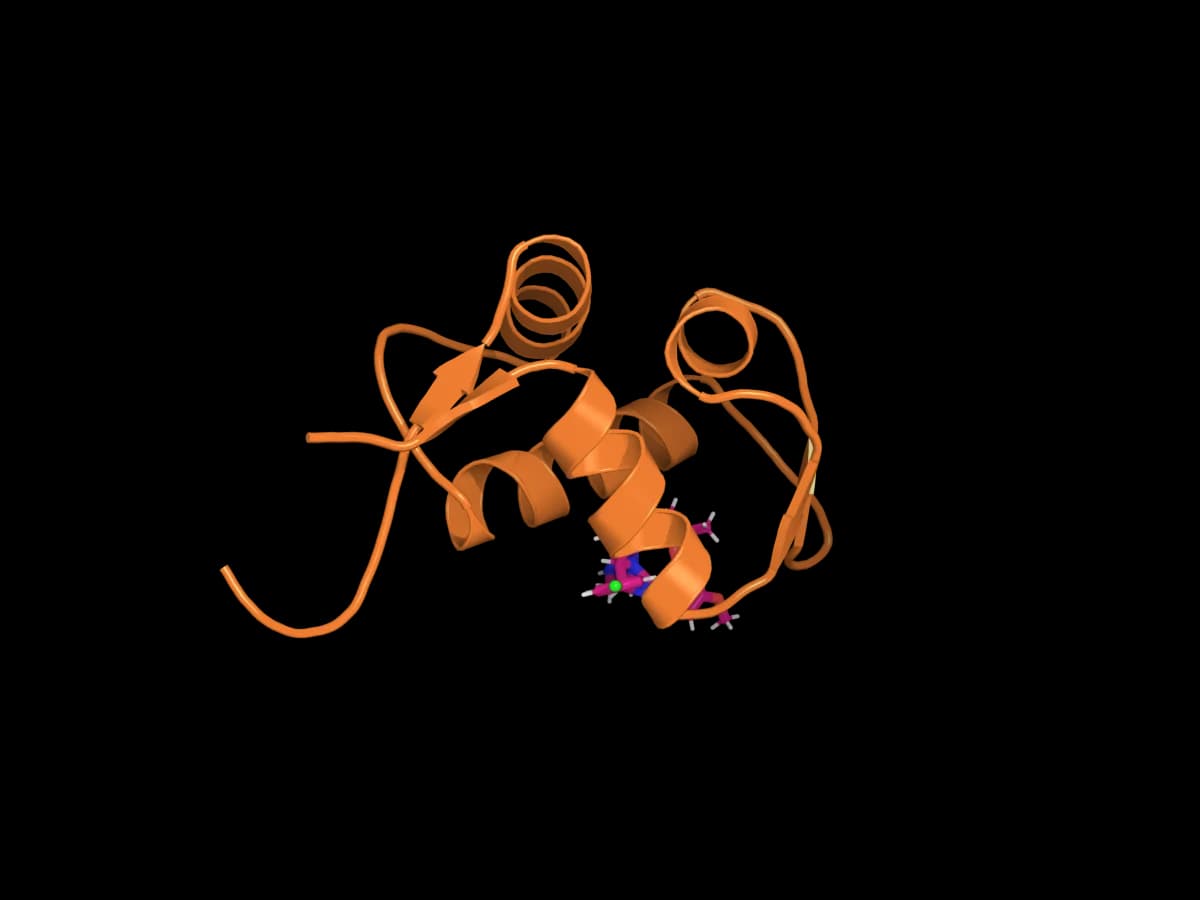
MDM2 is an E3 ubiquitin ligase that binds the tumor suppressor p53 and marks it for degradation. Inhibitors that block its p53-binding pocket are studied as a way to restore p53 in cancers that keep wild-type p53.
A model trained on measured activity data for MDM2 (Oncology). Give it compounds and it predicts their IC50 against MDM2, so you can rank candidates by it.
Predict with this model
- UniProt
- Q00987
- Reference structure
- PDB 5C5A, ligand NUT
- Training data
- TSAP (Boltz-2): 116 compounds, IC50TSAP (AI-QSAR): 116 compounds, IC50
- Scaffolds
- TSAP (Boltz-2): 13 scaffoldsTraining 12 · validation 10 (1 new)Largest scaffold 19%
- Validation
- Predicted and measured values are compared on compounds held out of training.
- Cost
- From 219 credits
- Model version
- TSAP (Boltz-2): TSAP pipeline v2.2TSAP (AI-QSAR): Ridge regression on docking features
Validation results
Predicted and measured values compared on compounds held out of training. RMSE is in log units (pIC50 and similar).
TSAP (Boltz-2)
Pearson r
0.93
R² (CoD)
0.82
RMSE (log units)
0.58
Holdout compounds
30
TSAP (AI-QSAR)
Pearson r
0.96
Holdout compounds
30
How to use it
Under Predict with this model, press TSAP (Boltz-2) or TSAP (AI-QSAR). The wizard of the workflow you pressed opens with the MDM2 model already selected.
Upload the SMILES of the compounds to predict as a .smi, .csv or .txt file.
Check the estimated credits and time, then submit.
The result is a table of compounds ranked by predicted IC50.
Limitations
- Predictions can be less accurate for compounds whose structures differ a lot from the training data.
- Validation used only about 30 compounds, so performance on new compounds can differ from these metrics.
- Predictions do not replace experiments. Use them to decide what to synthesize and measure first.
Run your own predictions with the MDM2 model
Sign up and get 500 credits. No card required. You can also choose to get news about new models and workflows.